20/02/18 - Met with the team and read script through properly for the first time. We made a list of pre-production tasks were going to need to complete in the coming lessons and discusses technical issues like props, costumes and budgeting.
07/03/18 - Started a shot list for Act 3, completed talent releases and got bought up to speed
09/03/18 - Discussed storyboards and almost completed the Act 3 shotlist
27/04/18 - Finished a shoot the previous day and begin editing them together. The shooting is going well, however we seem to be a little slow at putting together in the editing stages. We are starting to get underway with editing a few scenes now though.
Tuesday, 20 February 2018

Monday, 29 January 2018
Animation Evalutation

In my proposed ESting I wanted to create a whole battle scene rather than just focus on one individual character/object. My original idea was to have clay figures attacking a Lego castle and to have little Lego characters defending it. However when I began creating the set, i.e the castle and all the individual clay characters, I began to quickly realize I had bitten off a lot more than I could chew so to speak. In other words with the time pressures the scale of battle I wanted to create just wasn't possible. So half way into production I suddenly drastically switched ideas, opting to use inanimate objects of different colors/shapes, as warring factions instead. I ended up using pens vs pencils which worked well.
To exhibit my work and collect responses I first distributed my ESting video on social media services like YouTube, Facebook and Twitter. From this I was then able to ask family and peers to take a survey I created on survey monkey. From these responses I was able to draw a wide range of conclusions and make a good evaluation on what I could of done differently. Here are the questions I asked and the responses I got.
To review my animation project and responses I decided to write a written report. First few questions I asked were to profile the people answering and find out what demographic groups I'm getting responses from. In total twelve people answered my survey. Out of the twelve who answered, all were students aged between 16-20, a third of which were female and the other two thirds male.
I then began to ask what they thought about the animation. My first question in this was to ask what genre they would class it as. Two thirds of the responses (8/12) classed it as comedy, a quarter of responses classed it as drama (3/12) and one person answered Sci-Fi. I was attempting more of a drama genre with the animation trying to make a tense battle scene, however being animation I can see why more people may class it as comedy. I think its very hard to create a ten second short animation and be able to define it as a specific genre with the content in that time. Comedy was the expected response.

 My next question was a text box response I asked 'whats the biggest problem/error you can see?'. There were a range of answers, a couple including it being to short and having an unclear narrative, however having four people point out to me large frame drops in the middle five seconds in, and three people pointing out the sudden lighting change I can conclude these were definitely the two biggest errors in my animation.
Frame drops were due to me moving the objects quickly and not getting enough pictures in production which there's not too much you can do after, however the lighting could of definitely been changed through color correction in post production editing.
For my next question I asked them what might be their favorite aspect/element of the animation. I got a very wide range of answers here out of the twelve responses having offered a text box as response, however one that appeared three times was the fact it was clear to see what was happening and that I used larger pens for more 'important' characters giving them a sense of individuality.

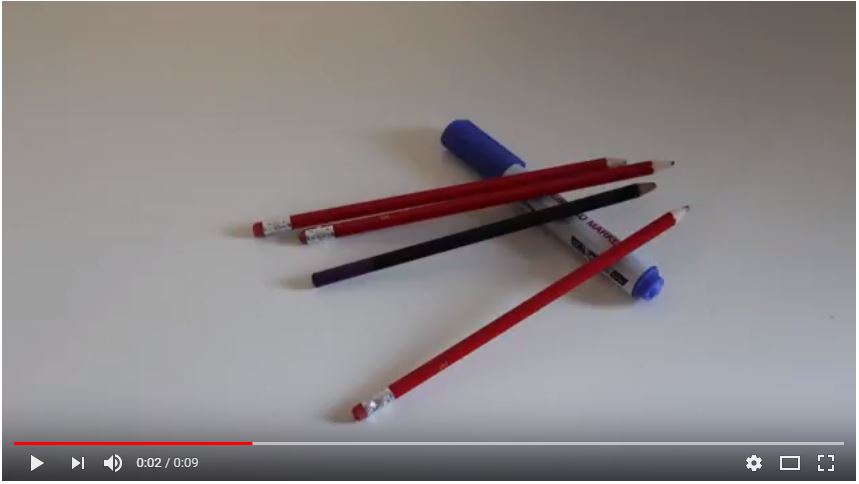 My penultimate question was asking if they found the narrative of the animation clear. I offered three answers, yes, no and partially. 83% of respondents (10/12) answered yes and the other 16% (2/12) answered partially. I feel like I completed my objective of having clear differing factions looking at these responses, however I am concerned the two partial people may of just been being polite.
In my final question I asked their opinion whether they thought they frames in the animation ran smoothly because I was pretty confident it was noticeable and a fatal error in my work. The responses were close having four people putting no it wasn't smooth (33%) and eight people saying yes it was (66%) however since I know most people are going to be answering more politely than honestly I can definitely draw the conclusion the frames weren't smooth enough for at least four people to notice. To have improved this I could of spent longer in production and payed more attention to the rate I was moving the objects at. The survey responses were really useful and I was able to see a lot of clear improvements I can make in post production, and errors/mistakes to learn from in future projects.
 Will making the Esting the biggest constraint I experienced was the time constraint. As explained, halfway through my initial production it suddenly became apparent my project was not realistic to complete with time and materials we had available to us. So I scrapped and completely changed my idea to something more realistic and do able. The other only real constraint was having to use a sound-clip given to us by the E4 website. It would of been really good to be able to choose/create our own however due to copyright reasons we only had a short selection we could choose from.
 I managed my time very poorly throughout the project. Not only did I 'bite off more than I could chew' so to speak, I was also absent in key production lessons meaning I had to use my own time to complete the project to a passable standard. I'm not too irritated with myself for planning to big at the beginning though because that was just due to a lack of experience and knowledge in the field of animation production If I had realized this sooner and changed plan quicker I could of definitely ended up with a better result. I think I did however meet all the requirements of the E4 Esting brief. I created a child-friendly animated scene that lasts approximately ten seconds using the music provided by E4. It doesn't contain any offensive content, doesn't promote any sort of ideologies and is able to be shown before watershed.
I obtained all feedback for the project on surveymonkey.com, sending a questionnaire to a total of 12 correspondents. The general tone was positive, it was useful because when asking about mistakes/errors I would see the same thing pop up twice or more, so I knew instantly looking at the answers what improvements I can make and where I went wrong. I learnt a lot from this project, mainly how much patience it requires to create an animated scene however a lot of other useful skills such as post-production editing and creating physical animations (zoetrops, thaumatropes) etc.
I think I would be a suitable candidate for work within the media industry where working to a brief is commonplace because I now have developed a full understanding of what a brief involves and the type of things it may require from you. I understand in the creative media industry briefs will be used between two or more people working in the same project to come to the same conclusion and paint the best possible picture they can. Personally I wouldn't take animation further as a career choice mainly because I don't have the patience to maintain a production like that. Producing a real camera short your able to watch your footage as its recording and I'm definitely the sort of person that needs to see a payoff to stay motivated, where as with animation indiviudal frames are taken so until you load them onto a PC and put them in an editing software your unable to see how smooth you've made it run and how well its been put together.
Friday, 12 January 2018
The Purpose of Music Videos
The Purpose Of Music Videos:
 In 1941 the 'Panoram Soundie' jukebox created he first ever type of music video. It was a jukebox that played short video clips along with the music. However music videos still didn't feature in films until 1956 when Hollywood began discovering the music video genre. It was big releases such as Rock Around the Clock, Rattle & Rock, Shake and The Girl Can't Help It, that started it off and there was a huge sudden boom in popularity towards the genre.
The first stand-alone music video then didn't come along until 1975 when Queen released Bohemian Rhapsody, a video that started a trend of video's we still consume today. Six years in 1981 later a channel launched called 'MTV; which was the first ever satellite music channel. It eventually became a massive hit and is common house hold name today. Then 1984 a short film, Thriller, by Micheal Jackson released changing the concept of music videos forever. 'The Making Of Thriller' home video is also released in the same year as was the first ever video about the making of a music video. In 1989 MTV renamed its 'Video Vanguard Award' to the 'Micheal Jackson Vanguard Award'.
 Artists have used music videos to promote themselves in many various forms over the years. It is one of the top marketing methods for an artist to use in the music industry. In 2013 following the death of Paul Walker, Wiz Khalifa released a promotional music video for Fast & Furious 7 'See You Again', in memory of Paul Walker which has now reached over 3 billion views on YouTube.
Other methods are used by artists to promote themselves in music videos like sexualizing the video in order to attract a young male audience. You can see early examples of this in Eric Prydz 'Call On Me' (2004) and more recent examples in Nicki Minaj's 'Anaconda' (2015)


Producers strategies will greatly vary depending on how far/successful the individual is in the music industry. For example, a famous world class musician will have a large production company working behind their music video, with dozens of people having an input into the project. They will generally have a large budget to work with a little to no limitations as to what they can produce. Micheal Jackson is known for having the most expensive made music video with 'Scream' having a budget upwards of $11,000,000. However Madonna dominates the field having the 2nd, 3rd, and 4th most expensive music videos ever made. Having a high budget production will also bring in top directors and even help build the careers of starting directors. For example Madonna had her video "Express Yourself" directed by David Fincher in 1989 which turned out to be a very successful video. David Fincher then went on to direct huge blockbuster films such as Seven (1995), Fight Club (1999) , and The Girl With The Dragon Tattoo (2011). David Finchers work on 'Express Yourself' is a good example of how small projects like music video's can be good for a directors career.

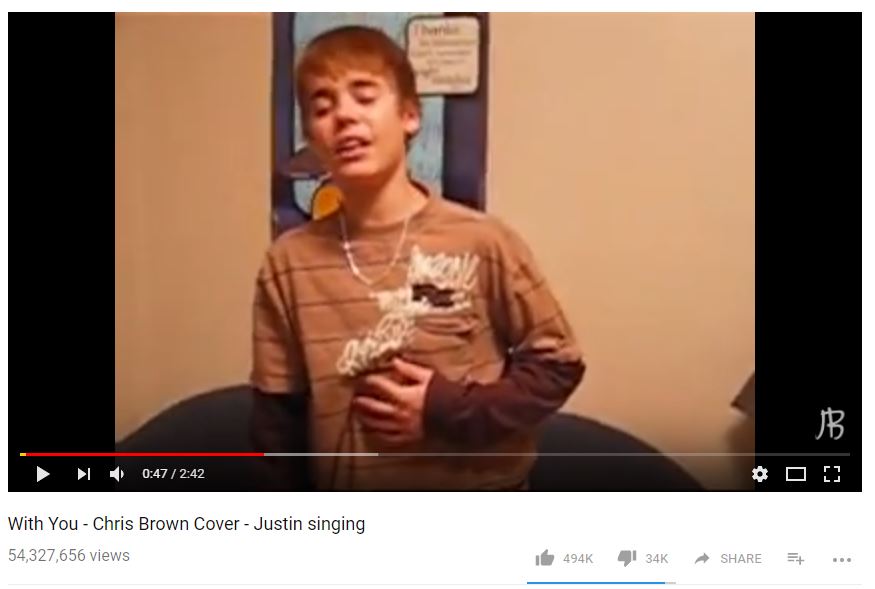 Then you have your smaller field artists. Individual producers who will try to promote themselves via music videos with next to no budget on social media sites like YouTube, Instagram and Facebook. There are many people who have made a name for themselves using social media, however probably the most famous example of an artist becoming successful from it is Justin Bieber.
 An example I know personally is an artist living locally to me in Norwich. Daniel Frost, otherwise known as 'Frost-D' began to make a small name for himself on YouTube attracting upwards of 11,000 viewers in some of his music videos. All his videos would of been shot unprofessionally on next to no budget and edited by someone with little experience. However producing this type of video and targeting the audience he directs his music towards still started to attract a following and gave him 3,000 subscribers
The different in being self produced artist is massive because you won't be in contract with a record label and won't have a guaranteed salary/income. Being self produced requires you to be promoting your own name and searching for your own work. In today's world with platforms such as YouTube, Soundcloud & Spotify this is a lot easier than it was a decade ago. Your able to promote your content to huge audiences and have complete control over what you make/create, where as a lot of the time that may not be the case when in contract with a record label.
 This change is media outlets is vastly reshaping the music industry and the way artists can get known/earn revenue. Only twenty years ago for example, the only way to earn money as an artist to earn money other than performing live was to produce a CD/record to be purchased or to create a music video to then have the rights purchases by the likes of someone like MTV. Media outlets we're very limited a few decades ago, however with today's technology more and more platforms are being created where artists can share their content and earn direct revenue in partnership with the sites/companies. YouTube is the biggest known for this, however 'Twitch.tv' has become a popular platform for artists to stream their talents to a live audience who can 'subscribe' or tip them money. This has also however made the industry a lot more competitive among top record labels as platforms like Twitch become more and more popular.
 An example of large artists using the extension of various media outlets would be Chris Cornell's 'You Know My Name'. This was released along side the 2007 film Casino Royale to be the made soundtrack for the film, but a music video was also released featuring all similar themes from the film i.e playing cards, blood, guns etc.
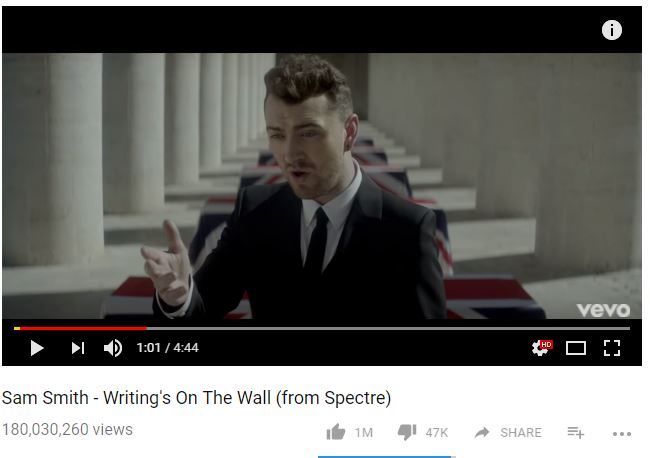
You can see this repeated five years later with Adele's 'Skyfall' in 2012 and a further three years later with Sam Smiths 'Writings On The Wall' for the release of Specter in 2015. However Sam Smithes video differed from the others in the fact it features actual clips from the James Bond film. You can see it switching between Sam Smith singing in a shot with a James Bond misc-en-scene then it quickly goes back to important scenes from the film. This is obviously huge promotion for artist giving them huge exposure to a much wider audience than they might of not reached before.


Synergistic marketing is the method of linking an already known common brand to your production to either increase the audience you reach, or to receive a lump sum of money to put into the production in return for product placement in your video. A unusual company you might notice this with is 'PlentOfFish.com'. In the early 2010's they managed to pop up in just about every new pop music video. Britney Spears received $500,000 for all the products she endorsed in her video 'Hold It Against Me'.
Sam Smith's - Writings On The Wall is also a really good example of large scale synergistic marketing. The whole of Sam Smiths video features clips from the Spectre film and reflects the theme of song through showing specific scenes from the films at certain moments. It also cuts out to clips of Sam Smith singing it a scene very similar to ones scene in the film suggesting he's in the bond universe. This is a very strong, effective use of synergistic marketing, attracting both the likes of Sam Smith fans to the Bond film, and Bond fans to Sam Smith.
It sounds obvious, but in conclusion I think music videos are so popular because they combine the two most popular forms of media in today's world, music and video. Music has been around for centuries before us, so in the early days of music videos it was only natural the two would come together when the world started to become obsessed with screens. Musicals and music videos channels then spawned from that, however today the most used outlet for music videos is YouTube. Being completely free and having instant access to any song you could possibly think of, it has become the most used platform to listen/watch music on. Music videos will only now grow bigger and hit higher record numbers of views as social media grows bigger & bigger and more people have access to the free music video streaming service known as YouTube.
Sources:
https://en.wikipedia.org/wiki/List_of_most_expensive_music_videos
Jukebox Picture: https://www.youtube.com/watch?v=Hn26O7f97IE
MTV Picture: https://www.theverge.com/2013/7/3/4490312/mtv-celebrating-independence-day-by-playing-music-videos
Wiz Khalifa - See You Again: https://www.youtube.com/watch?v=RgKAFK5djSk
Eric Prydz - Call On Me: https://www.youtube.com/watch?v=QQSYo_pC-QA
Niki Minaj - Anaconda: https://www.youtube.com/watch?v=LDZX4ooRsWs
Justin Bieber Young Video: https://www.youtube.com/watch?v=eQOFRZ1wNLw
Frost D Video: https://www.youtube.com/watch?v=7wwzotlThn4
James Bond Video: https://www.youtube.com/watch?v=2MNoBx5mvBI
Britney Spears - Hold It Against Me:https://www.youtube.com/watch?v=K5djSk7u
Monday, 8 January 2018
Understanding the Requirements of Working to a Brief
Understanding the Requirements of Working to a Brief
 A brief, or a project brief is a set of guidelines given for a person to work by. A production company looking looking to create a project from a fresh idea may commission a writer/producer/artist etc. to do the work for them, however the will pitch them a brief or project brief to inform them of how they want it done. Commission is a sum of money paid to an employee upon completion of a task. Some times it will be a flat amount, and some times it will be payed on a percentage of sales/success.
A specific type of brief called a tender brief, is where where a client will advertise their brief and a production company will bring together a proposal that they will pitch to the client, there could be multiple pitches to the client from many different companies, so the client will then get the chance to choose the proposal that they think best suits their brief and offer the job to that production company.
Another type of brief is a creative brief. A creative brief is a document created through meetings, readings, interviews and discussions between a client a designer before work begins. This will generally be applied in lines of work such as fashion designers, logo designers, architects etc.
You also have contractual briefs. Contractual briefs are legal documents that outline the duties required by a company/employer. Contractual briefs are legally obligatory and must follow what ever is outlined.

 There was quite of lot of demand in terms of guidelines when creating an Esting for E4. The main constraint was keeping it to ten seconds. I noticed with a lot of groups in my class one of the most common problems was people having either planed too much for their Esting or not enough. Being new to animation though it was naturally difficult for us to estimate a time scale for our projects in pre-production. The next imperative guideline was that the audio of the clip had to be taken from a selection of MP3's on the E4 website due to copyright constraints. For some people this was not a problem, but for others finding the right sound clips to go over their animations was a struggle with the limited selection available.
  We didn't really have any room to negotiate our brief whatsoever. Because it was a country-wide competition, once given the set of guidelines from the E4 website we had no opportunity to speak with E4 and try get easier terms, they were set in stone. Like mentioned, copyrighted music was one of the biggest issues/constraints in planning. Myself and others had great ideas for sound/music that can go over specific clips & segments however it quickly became apparent there would be no way of implementing them due to standard industry copyright limitations. In 2016 Deadpool director, and ex-deadpool 2 director Tim Miller quit Deadpool 2 production due to 'creative differences with Ryan Reynolds'. However it was later discovered it was due to an argument between the two as to who should be cast as the new villain 'Cable'. Since Ryan Reynolds was the producing and has 'casting approval' he seemed to have own and been unwilling to negotiate resulting in Tim Miller quitting as director mid-production.
There was only one amendment I had to make to the proposed final product and that was to increase it in length. Like mentioned, never working with animation before it was difficult to estimate an amount of time when creating things like storyboards. So when I got to my last shot and edited all together I discovered it was only 7 second in length. This then resulted in me having to back into production and take another 30-40 shots. This could of been prevented with slightly better planning or consulting in someone with more experience.
 Amendments may be made to a budget/fees/conditions outlines in contracts etc. for a many number of reasons. The most common might be pressure from investors. If an investor has put money into a production company but begins to worry there wont be a return on their money they may begin to apply pressure on the production, rushing everyone involved.
Someone will generally respond to a brief in order to work towards the goals/standard their employer/partner wants. Its done to communicate across a set of ideas on how to complete a task. A learnt a lot of knowledge and new skills a long the process of creating my Esting. I learnt simple key things such as 120 pictures will equal 10 seconds and animation runs in 24 frames per second. However I also learnt and developed valuable skills like patience whilst creating the animation. The project also helped develop multi-task skills, specifically during shooting.
Friday, 5 January 2018
GC1: The Commissioning Process and Workings as a Writer; The Journey of a Script
GC1: The Commissioning Process and Workings as a Writer;
The Journey of a Script
The Journey of a Script
Writer/Producer commissioning is when one is given the task to write/produce a piece of work on the basis they may or may not get payed. There are two ways to pay an author for a story. The first is to pay a royalty on each copy sold once its already written and produced. Usually a non-returnable amount of money is payed up front as an advance then no further money is due to the author until the book has earned that amount in royalties.
 The second way is to pay a flat fee before the story is written. This is commissioning a writer. An production company/director would pitch an idea they want written to a well-established reputable writer and once the story is written they can they do as the please with it. They can either decide to scrap it, keep it behind in production and use it at a later date, or produce it straight away. It is out of the writers hands once the flat amount is payed and they will earn no more royalties from the book/screenplay.
 There are however many different job roles in the commissioning process of a novel/screenplay. There are the actual production roles such as; writing, producing, directing etc. however commissioning roles also include to jobs in the post production process such as commissioning editors, script editors and agents. Most production companies buy a story/screenplay with the pure intent of making money, however sometimes there are ulterior motives. In 2013, Tom Roberts a multi-award wining film director was approached by The Bill and Melinda Gates Foundation and The Crown Prince of Abu Dhabi (a government agency) with the purpose of creating a film to rally philanthropists together and help eradicate polio from Pakistan. This was released in 2014 and was called 'Every Last Child''.
An independent writer usually works and has to manage time in different methods to most professions. In a typical job a worker will have a set time they have to arrive at location, and a set time they can leave. Whereas for a writer they have to create their own limits. Whether they set their own starting/finishing hours, decide on a set amount of time to spend writing per day or even a set amount of words to reach, a writer has to have good time management and discipline to succeed.
 Every writer knows that in the industry you have to be very careful and wary of the legal and ethical aspects of writing, particularly copyright and plagiarism laws. However factors like watersheds and censorship issues also have to be taken into account. In the UK, the BBC has a well established policy of making 9pm the pivotal point of the evening's television. After this time television shows aired will contain a high level of inappropriate content for children. Since 2003 Ofcom has taken action on more than 300 occasions where broadcasters have scheduled unsuitable content before or immediately after the watershed. In a number of cases, inappropriate music videos were shown in the afternoon.
However the most complained happening on television to date was unscripted on reality TV. In 2007 when Jade Goody used racially-motivated slurs in the Big Brother house against follow celebrity contestant Shilpa Shetty a record 44,000 people contacted Ofcom with a further 3,000 contacting channel 4. The show was taken off air for a year and Jade was removed from the series.
Unsuitable content can include everything from sexual content, to graphic violence to swearing. Only offensive and frequent swearing is banned before the watershed.
 Commissioning a script can be a long process which requires hard work and patience. New and original work needs to be created to be able to achieve this, as well a passion for writing. There are many commissioning bodies, but making an impression on someone working in the business can really be one way to break into the industry.
BBC Vision:
Where as a commissioning body in terms of screenwriting can be in the form of a company, organisation, corporation etc. that will decide collectively whether a script will be produced or not. One commonly known commissioning body is BBC Vision. They commission scripts based on current needs for their genres and channels. They constantly look for holes in their channels, trying to a target audience that their content is missing. Once they figure out one, they'll scout and commission scripts looking for a only few very specific types of story.
Bluecat Screenplays:
 Another example of a commissioning body would be the Bluecat Screenplays competition . They are a short film competition that has been running since 1998. It gives writers the opportunity to have their film screen in Los Angeles and 1st place winner receives $10,000. There are a lot of guidelines to follow but the some of the most important ones are; all ideas must be original, all entries must be in English, short films must be between 1-50 minutes long and short screenplays must be between 1-49 pages long.
Independent Cinema Office:
 The British Independent Cinema Office is a example of a commissioning body organisation. Its a national support organisation founded in 2003 for independent exhibitors of all kinds including cinemas, film festivals and film societies. They offer services such as training independent cinema professionals, distributing films into the UK market place and running events for cinema professionals that is meant to encourage collaboration in the industry.
There are many different job roles that the a script will meet on its journey from paper to production. Here are some examples and what they might involve;
Production Manager
Production managers organize the business finance and employment issues in screenplay/script productions. As a production manager, they are in charge of how the budget is spent and making sure everything runs smoothly in the production of the script. The average salary for a production manager in the UK is £36,000 however salaries can pay up to £48,000.
Executive Producer

The role of the Executive producer is to oversee all the work of the producer on behalf of the studio, the financiers and the distributors. They will ensure the film is completed on time, within the budget, and to agreed artistic and technical standards. Education requirements vary, although a bachelor's degree in film studies/journalism is generally required. The average salary for an Executive Producer in the UK is £86,000.
Commissioning Editor
In publishing, a commissioning editor is essentially a buyer. It is the job of the commissioning editor to advise the production company on which scripts to produce. Usually the decision of whether to actually contract a script is taken by a senior manager rather than the editor, however a commissioning editor can still earn in the region of £20,000 to £40,000.
 The role of a writer during/after production will vary a lot between production companies/writers/contracts etc. Some writers have their script sold and will have no further input on what happens from that point on. However there are writers like Quentin Tarantino who writes all his own screenplays, and then go on to direct and produce them. In my opinion I think this method produces the best films, with the one mind who originally envisioned the scenes onto paper being the one in control.
 The second way is to pay a flat fee before the story is written. This is commissioning a writer. An production company/director would pitch an idea they want written to a well-established reputable writer and once the story is written they can they do as the please with it. They can either decide to scrap it, keep it behind in production and use it at a later date, or produce it straight away. It is out of the writers hands once the flat amount is payed and they will earn no more royalties from the book/screenplay.
 There are however many different job roles in the commissioning process of a novel/screenplay. There are the actual production roles such as; writing, producing, directing etc. however commissioning roles also include to jobs in the post production process such as commissioning editors, script editors and agents. Most production companies buy a story/screenplay with the pure intent of making money, however sometimes there are ulterior motives. In 2013, Tom Roberts a multi-award wining film director was approached by The Bill and Melinda Gates Foundation and The Crown Prince of Abu Dhabi (a government agency) with the purpose of creating a film to rally philanthropists together and help eradicate polio from Pakistan. This was released in 2014 and was called 'Every Last Child''.
An independent writer usually works and has to manage time in different methods to most professions. In a typical job a worker will have a set time they have to arrive at location, and a set time they can leave. Whereas for a writer they have to create their own limits. Whether they set their own starting/finishing hours, decide on a set amount of time to spend writing per day or even a set amount of words to reach, a writer has to have good time management and discipline to succeed.
 Every writer knows that in the industry you have to be very careful and wary of the legal and ethical aspects of writing, particularly copyright and plagiarism laws. However factors like watersheds and censorship issues also have to be taken into account. In the UK, the BBC has a well established policy of making 9pm the pivotal point of the evening's television. After this time television shows aired will contain a high level of inappropriate content for children. Since 2003 Ofcom has taken action on more than 300 occasions where broadcasters have scheduled unsuitable content before or immediately after the watershed. In a number of cases, inappropriate music videos were shown in the afternoon.
However the most complained happening on television to date was unscripted on reality TV. In 2007 when Jade Goody used racially-motivated slurs in the Big Brother house against follow celebrity contestant Shilpa Shetty a record 44,000 people contacted Ofcom with a further 3,000 contacting channel 4. The show was taken off air for a year and Jade was removed from the series.
Unsuitable content can include everything from sexual content, to graphic violence to swearing. Only offensive and frequent swearing is banned before the watershed.
 Commissioning a script can be a long process which requires hard work and patience. New and original work needs to be created to be able to achieve this, as well a passion for writing. There are many commissioning bodies, but making an impression on someone working in the business can really be one way to break into the industry.
BBC Vision:
Where as a commissioning body in terms of screenwriting can be in the form of a company, organisation, corporation etc. that will decide collectively whether a script will be produced or not. One commonly known commissioning body is BBC Vision. They commission scripts based on current needs for their genres and channels. They constantly look for holes in their channels, trying to a target audience that their content is missing. Once they figure out one, they'll scout and commission scripts looking for a only few very specific types of story.
Bluecat Screenplays:
 Another example of a commissioning body would be the Bluecat Screenplays competition . They are a short film competition that has been running since 1998. It gives writers the opportunity to have their film screen in Los Angeles and 1st place winner receives $10,000. There are a lot of guidelines to follow but the some of the most important ones are; all ideas must be original, all entries must be in English, short films must be between 1-50 minutes long and short screenplays must be between 1-49 pages long.
Independent Cinema Office:
 The British Independent Cinema Office is a example of a commissioning body organisation. Its a national support organisation founded in 2003 for independent exhibitors of all kinds including cinemas, film festivals and film societies. They offer services such as training independent cinema professionals, distributing films into the UK market place and running events for cinema professionals that is meant to encourage collaboration in the industry.
Job Roles
There are many different job roles that the a script will meet on its journey from paper to production. Here are some examples and what they might involve;
Production Manager
Production managers organize the business finance and employment issues in screenplay/script productions. As a production manager, they are in charge of how the budget is spent and making sure everything runs smoothly in the production of the script. The average salary for a production manager in the UK is £36,000 however salaries can pay up to £48,000.
Executive Producer

The role of the Executive producer is to oversee all the work of the producer on behalf of the studio, the financiers and the distributors. They will ensure the film is completed on time, within the budget, and to agreed artistic and technical standards. Education requirements vary, although a bachelor's degree in film studies/journalism is generally required. The average salary for an Executive Producer in the UK is £86,000.
Commissioning Editor
In publishing, a commissioning editor is essentially a buyer. It is the job of the commissioning editor to advise the production company on which scripts to produce. Usually the decision of whether to actually contract a script is taken by a senior manager rather than the editor, however a commissioning editor can still earn in the region of £20,000 to £40,000.
The role of a writer during/after production will vary a lot between production companies/writers/contracts etc. Some writers have their script sold and will have no further input on what happens from that point on. However there are writers like Quentin Tarantino who writes all his own screenplays, and then go on to direct and produce them. In my opinion I think this method produces the best films, with the one mind who originally envisioned the scenes onto paper being the one in control.Friday, 8 December 2017
Wednesday, 29 November 2017
Screenwriting Research Dossier

Here is my annotated script of reservoir dogs showing my knowledge on the typical conventions of a script:
This script uses a method called 'breaking the fourth wall' to develop the protagonist in the pilot episode of this TV series. To give some context the character, Elliot, is known throughout the series as being very psychotic and unstable. He talks to his 'imaginary friend' in voice overs throughout the series when he is actually addressing the viewer. For example when he blacks out and wakes up after he'll ask in his head "Did you see what happened? I must of passed out". Straight away from the opening scene of the show it uses this to begin to build a picture of characters inner presence. From Elliot talking to his 'imaginary friend' we learn hes lives with psychotic tendencies and how he feels about American society & the world around him. Outer presence and context is little covered in this part of the script other than mentioning his age and what hes wearing, however I wanted to use this example because its so unique in the way it develops inner presence.
Here is my example examining dialogue;
A scene from slightly later on in the episode where Elliot is talking to his psychiatrist. She asks him "what is it about society that disappoints you so much?" and he replies with a series of voice overs whilst a montage of various elements of our society plays simultaneously. This comes together to make a really good scene and I think the dialogue correctly expresses the characters feelings and ideologies on the world.
For my example of good use of scene direction I used Game of Thrones S6xE09 'Battle of The Bastards'. I wanted to use this cause I knew even before reading the script that this large scale would of been really well written. So much is happening at once in the scene, I think the writer has really accurately portrayed how he wanted to scene to play out;
Audience Research:
 Looking at the genre, time and setting of the story my primary target audience would be males aged 15-34. Due to it containing themes of violence, gambling and gang related issues I would have to aim for an age 15 certificate. I considered aiming for an 18 certificate but figured if I'm able to tone down some of the themes, having a wider target audience will be beneficial to the film. Looking into it furthermore, being set in the late 1970's in the east end these themes are very reletable to people living in the time/area. So my secondary target audience would be aimed at males 45+, particularly living in the south of England. 'Legend' (2015) is a good example of a film that expressed these themes and was attractive because of them.
Theme/Setting Research:
Wanting to set my story forty years before I was born, I knew I would have to research and look into some video footage of the East End at that time. This short clip on YouTube was very helpful at painting a picture of what that day and age might of looked like;
I think that video was beneficial towards giving me ideas for color schemes and locations I might use. However I then found another short clip which was perfect at showing me the misc-en-scene I would want to go for. Watching this video I took note of the outfits, accents and the food being eaten;
To look at character types, I looked an interview from the 1960's of the Kray Twins talking about a then ongoing court case involving their personally owned club;
Similar Existing Media Texts:
 One of the biggest influences for the theme/setting comes from work directed by Guy Ritchie, specifically Snatch (2000) and Lock Stock & Two Smoking Barrels (1998). Both coming out and being set in late 90's east end, these type of films are exactly what I have in mind for my story. The unique part of these films are that they're able to have funny well written comedic moments all whilst maintaining their serious story lines and keeping you invested in the drama of the story. Take this clip from Snatch (2000) for an example of this;
Bibliography:
http://www.bluecatscreenplay.com/
https://www.scribd.com/doc/25164568/Reservoir-Dogs-Screenplay
https://ewedit.files.wordpress.com/2015/11/legend-1.jpg?w=612
http://www.zen134237.zen.co.uk/Mr_Robot_1x01_-_Pilot.pdf
https://m.emmys.com/sites/default/files/Downloads/GameofThronesEP%20609%20-%20Battle%20of%20the%20Bastards%20-%20GOT%20S6.pdf
https://www.youtube.com/watch?v=i4dzvy1oNuE
https://www.youtube.com/watch?v=_7-cfzV2BuE
https://www.youtube.com/watch?v=1crhwQPKr7w
Subscribe to:
Posts (Atom)